Taiwan Strait Crisis ALERT! | 2026-01-03 | Blockade style drills meet allied pushback signals
Today highlights
- The United States urges Beijing to end military pressure and return to a dialogue frame as partners issue statements
- Canada rejects unilateral change by force or coercion and elevates strait access to a security and prosperity issue
- Taiwan leadership reinforces deterrence and democratic defense messaging while managing internal resource and political constraints
- US defense deals advance, strengthening long term capability while raising timing and integration risks
Risk context
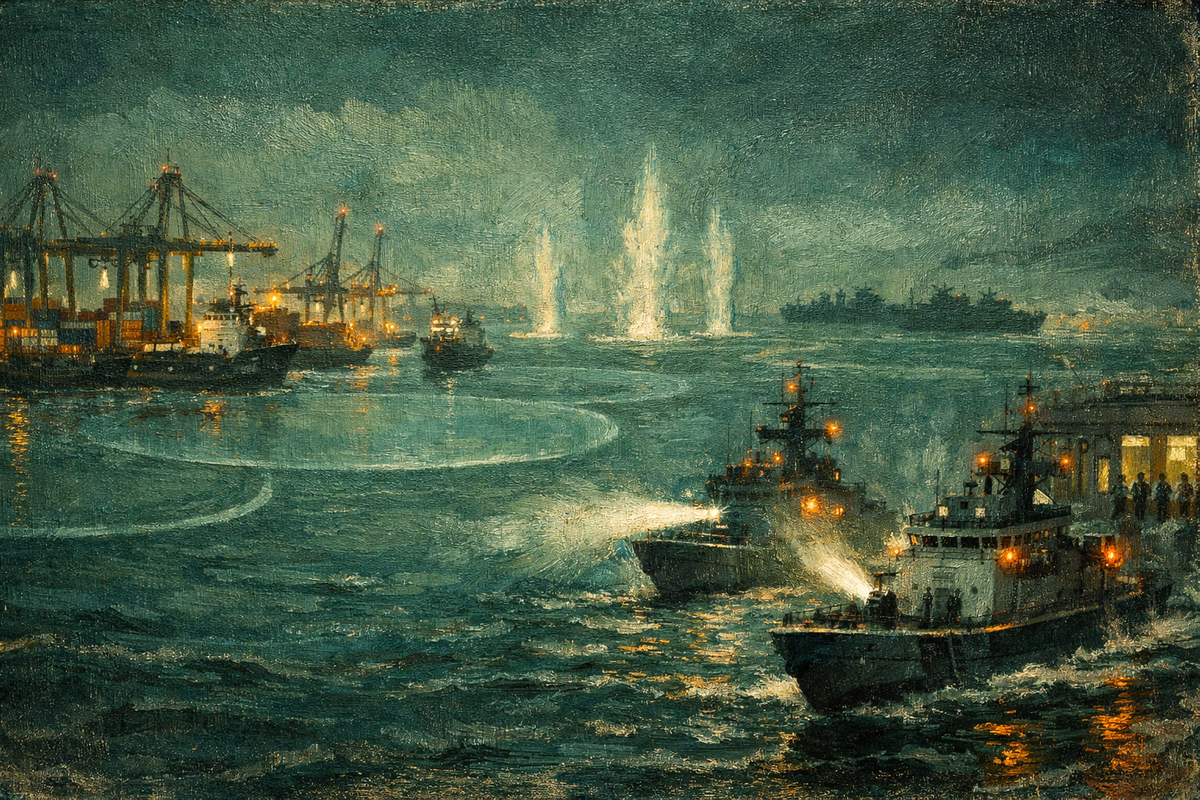
- The key shift is not a single show of force but the assembly of repeatable procedures that link drills, live fire, and information releases. When declared zones cut across port approaches, air routes, and operating areas, the effect moves from symbolism to day to day disruption that compresses decision time for Taiwan and partners.
- External statements aim to contain losses by stressing opposition to unilateral status quo change and the need for accessible waterways. Deterrent weight depends on whether messaging is followed by observable posture, supply chain and finance contingencies, and faster coordinated responses to gray zone actions.
- Arms sales and contracts support Taiwan defense capacity, but near term risk depends on delivery and integration pace. If procurement timelines lag training, logistics, and dispersal, a path dependence can emerge that looks strong on paper while leaving short window gaps that Beijing can exploit.
Today items
1) 【ISW sees a move toward normalized blockade rehearsal】
- One line: ISW argues Justice Mission 2025 simulated blockade elements and repeats key steps, aiming to make high pressure actions routine
- Simplified brief: ISW assesses that the PRC December 29 to 30 large scale drills simulated a blockade and rehearsed operational elements needed for a possible campaign. It describes this as the second drill of comparable scale around Taiwan since the May 2024 inauguration of Taiwan new leadership, suggesting an effort to institutionalize high intensity activity. ISW frames repetition as both external deterrence and internal mobilization, with effects shaped by whether outsiders treat each iteration as real escalation. The excerpt does not provide full force breakdowns, so the judgement relies primarily on frequency and pattern continuity.
- Taiwan Strait impact: Impact area is crisis management and warning thresholds. The mechanism is repetition that reduces outside sensitivity while increasing the chance of miscalculation and escalation by drift. Over time, it can force more spending on routine alert operations rather than capability building
- Watchpoint: Over the next 7 days, a shift from ad hoc announcements to fixed naming and periodic scheduling, especially paired with long duration presence of enforcement and naval vessels, would indicate acceleration of a normalized blockade model
Original title: China & Taiwan Update, January 2, 2026
Source / time: Institute for the Study of War | Jan 2, 2026
2) 【Canada rejects unilateral change and stresses strait access】
- One line: Canada issues an official statement opposing unilateral status quo change and frames strait accessibility as a security and prosperity stake
- Simplified brief: Global Affairs Canada released a January 1 statement opposing any unilateral attempts to change the status quo across the Taiwan Strait. It stresses that the strait is indispensable to security and prosperity and calls for maintaining its peaceful and accessible nature. The framing shifts the issue toward international public interest and shipping access, limiting space for Beijing to externalize costs onto third country trade and transport. The excerpt does not describe a follow on multilateral mechanism, so the key signal is the normative positioning.
- Taiwan Strait impact: Impact area is third country alignment. The mechanism is official language that ties Taiwan Strait risk to shipping and insurance pricing, increasing external friction for Beijing. Broader adoption by mid sized partners would raise the political cost of gray zone escalation
- Watchpoint: Over the next 7 days, look for similar phrasing from other partners that highlights strait accessibility or shared language across statements, which would suggest faster alignment
Original title: Statement on China’s decision to undertake large-scale military drills around Taiwan
Source / time: Global Affairs Canada | 2026-01-01
3) 【Trump diplomacy sequence: call with Japan leader then envoy meeting】
- One line: A call with Japan leader and a planned meeting with the US ambassador to China signal intensified coordination during a sensitive post drill window
- Simplified brief: The report says President Donald Trump plans to meet US ambassador to China David Perdue at Mar a Lago following a call with Japanese Prime Minister Sanae Takaichi. It describes the contacts as occurring at a delicate moment and says that Washington recently approved what it calls its largest arms sale to Taiwan. The Japanese leader is cited emphasizing closer alliance coordination and planning around a Washington visit. The excerpt does not reveal the agenda or messages to Beijing, so impact should be assessed through subsequent PRC and allied actions.
- Taiwan Strait impact: Impact area is deterrence credibility and communication channels. The mechanism is denser signaling through alliance coordination and diplomatic contact that can reduce misreading. If Beijing responds with faster military pacing, near term risk could increase
- Watchpoint: Over the next 7 days, watch whether new Taiwan related military notices or sanctions language appear after these contacts. Parallel acceleration would suggest diplomacy is not easing pressure
Original title: Trump to meet US’ China envoy after call with Japan PM Takaichi as Taiwan drills conclude
Source / time: The Diplomatic Insight | January 2, 2026
4) 【Pentagon linked Taiwan contract advances, with long delivery horizon】
- One line: A multi year US defense contract supports Taiwan air force needs, strengthening long term capability but emphasizing timing mismatch risks
- Simplified brief: Taipei Times reports that Lockheed Martin received a foreign military sales linked contract for Taiwan with a ceiling value of 328.5 million US dollars. It says the contract supports procurement and delivery of advanced sensor related systems to meet an urgent operational need of Taiwan air force, with work in Orlando, Florida and expected completion in June 2031. The excerpt does not fully specify the system model, but it frames the effort as urgent capability reinforcement. Long horizon delivery highlights the need for parallel training, logistics, and dispersal to reduce short window gaps.
- Taiwan Strait impact: Impact area is air defense and identification capacity. The mechanism is improved sensing and situational awareness that supports layered interception and decision making. If delivery lags while drill pace accelerates, early crisis resilience still depends on existing inventories and rapid partner support
- Watchpoint: Over the next 7 days, watch for Taiwan side integration and training plans or dispersal measures. Limited accompanying plans would reduce near term marginal deterrence effects
Original title: Lockheed gets US$328.5 million Taiwan contract
Source / time: Taipei Times | Fri, Jan 2, 2026
5) 【New Taiwan arms package sparks timing and strategy debate】
- One line: A commentary argues that arms sales need timing and force structure alignment, not only political signaling, especially under drill pressure
- Simplified brief: Responsible Statecraft says the US State Department approved an 11 billion US dollar arms package for Taiwan on December 17 and cites official language on maintaining credible defense capability. It says that China hawks and defense industry supporters praised the announcement and cites a Washington Post editorial calling it a welcome change. The author argues that under Justice Mission 2025 pressure imagery, announcements alone do not reduce risk and that delivery pace, training, logistics, and alignment with Taiwan domestic production matter. The excerpt does not list itemized systems, so force structure fit cannot be evaluated from this text alone.
- Taiwan Strait impact: Impact area is deterrence signaling and force structure. The mechanism is that far term or slow to field systems can be priced by Beijing as tolerable while outsiders overestimate immediate reinforcement. Better alignment with Taiwan production and dispersal would raise Beijing assessed costs for blockade or surprise
- Watchpoint: Over the next 7 days, watch for details on delivery milestones or training cooperation. If the story remains at announcement level, the debate will persist and can be exploited by Beijing
Original title: New weapons to Taiwan: 'Overdue correction' or poorly timed move?
Source / time: Responsible Statecraft | 2026-01-02
6) 【Beijing uses trade talks leverage to pressure UK Taiwan engagement】
- One line: After a UK minister visit to Taipei, Beijing reportedly threatened to cancel trade talks, showing fast spillover into third country economic coercion
- Simplified brief: The Guardian reports that China warned the UK it would pull high level trade talks after a government minister visited Taipei on June 29 and 30 and met President Lai Ching te and other officials. It says the talks would have been the first trade and economic dialogue since 2018 and that London privately moved to contain the fallout, with business and trade secretary Peter Kyle traveling to China in early September for the meeting. The article also says the minister pledged to boost trade in key sectors during the Taiwan visit, highlighting the trigger Beijing sought to penalize. The excerpt does not provide the full UK internal decision chain, but it shows how cabinet travel can become a lever in Beijing economic statecraft.
- Taiwan Strait impact: Impact area is external support and economic risk transmission. The mechanism is the use of trade and dialogue access as rewards and penalties, pushing third countries toward self restraint and narrowing Taiwan diplomatic and commercial space. Wider adoption would bind crisis coordination to economic cost calculations
- Watchpoint: Over the next 7 days, watch for UK adjustments to Taiwan engagement pacing or similar warnings aimed at other governments. A chain of cases would indicate rising spillover of economic coercion
Original title: China threatened to cancel key trade talks after UK minister’s Taiwan visit in June
Source / time: The Guardian | Fri 2 Jan 2026 14:00 GMT
7) 【PLA video fuels debate over J20 approach to key Taiwan base】
- One line: A drill video is read as possible J20 proximity to a key base, using uncertainty to test Taiwan warning credibility and public confidence
- Simplified brief: South China Morning Post reports that a PLA Eastern Theater Command video released during the Justice Mission 2025 drills sparked debate over whether a J20 stealth fighter approached a key Taiwan military airport and whether Taiwan failed to detect it. It says the footage shows the aircraft near an unidentified landscape and that some analysis points to the area around Pingtung airbase in southern Taiwan, which hosts critical facilities including an early warning radar station. It says that a retired Taiwan naval officer posted comparison material on social media, amplifying the discussion. The excerpt does not provide Taiwan radar data or an official response, so proximity claims remain unverified within this text.
- Taiwan Strait impact: Impact area is air defense credibility and crisis psychology. The mechanism is doubt amplification that can force more search and alert spending and can raise the chance of intercept incidents under stress. Repeated videos would further increase misperception and escalation triggers
- Watchpoint: Over the next 7 days, watch whether Taiwan releases radar related clarification or changes alert posture around key bases. Limited transparency can strengthen psychological effects
Original title: Did a PLA stealth fighter approach a key Taiwan airbase? New video sparks debate
Source / time: South China Morning Post | Fri, 03 Jan 2026
8) 【Triangle stability rests on tacit assumptions that can break】
- One line: An analysis argues that the strait balance depends on tacit assumptions rather than explicit commitments, creating miscalculation space under drill and rhetoric pressure
- Simplified brief: ABC Australia frames the Taiwan Strait around three common assumptions and warns that stability is structured by unspoken understandings. It says Xi Jinping January 1 New Year remarks stressing cross strait blood ties and that they came after large scale drills. The article says the drills combined air, naval, and rocket force elements and that the United States has repeatedly flagged rising risk while avoiding absolute clarity on defense. It also discusses Taiwan public preference for maintaining the status quo and argues that these assumptions can fail under pressure even without a deliberate plan.
- Taiwan Strait impact: Impact area is miscalculation and escalation speed. The mechanism is that tacit understandings amplify time pressure and signal noise in a crisis, increasing the chance of wrong inferences. When drills and political language reinforce each other, a single incident is more likely to cascade
- Watchpoint: Over the next 7 days, watch for new red line style statements or actions that move closer to perceived bottom lines. Such signals would indicate tacit understandings loosening
Original title: China-Taiwan-US triangle held together by assumptions and one dangerous lie
Source / time: ABC Australia | Thu 2 Jan 2026 at 7:05pm
Trends and scenarios
- Blockade style drills function as administrative routines: declared zones, live fire, and information releases reinforce each other. This allows tension to rise without a single decisive event and steadily shifts risk pricing in shipping, insurance, and corporate continuity planning.
- Partner statements are moving the issue from sovereignty dispute toward an anti coercion and accessible waterways frame. Deterrence effect rises only if messaging is followed by operational level coordination that addresses gray zone activity, otherwise Beijing can treat it as symbolic and divisible politics.
- Procurement and drill tempo may reinforce each other: faster exercises alongside faster buying. The key variable becomes whether Taiwan internal resource allocation, training, and integration can keep pace with the threat rhythm.