
Taiwan Strait Crisis ALERT! | 2026-01-10 | Forward live fire meets daily life as external signals fluctuate
Key points today
- Beijing pushes live fire activity closer to the frontline, so Taipei faces higher pressure on warning and civilian resilience, see item 1
- Washington President Trump frames Taiwan as up to Xi, so deterrence signaling needs faster clarification, see item 2
- Washington Defense Department treats 2027 as a capability threshold, so Taipei must front load readiness tempo and resilience spending, see item 3
- Chinese online users map the Venezuela operation onto decapitation talk, so Taipei must treat command survival as a hard metric, see item 4
- Beijing Ministry of Commerce targets Japan with dual use controls and a trade probe, so allied supply chain conditions tighten, see item 5
Risk context
Beijing moves military activity closer to frontline communities, so Taipei must treat civilian systems as the first defensive layer. Washington shows more elasticity in Taiwan language, so Beijing can test red lines through gray zone actions. Taipei spends decision bandwidth on constitutional friction and legislative pressure, so fast crisis coordination becomes harder. Tokyo faces pressure on key materials and dual use items, so allied capacity and political will are tested together.
Today items
1) Immediate | Pingtan frontline notices and rocket launches appear together
- One line summary: Beijing increases frontline activity, so more warning signals appear in local communities on Pingtan.
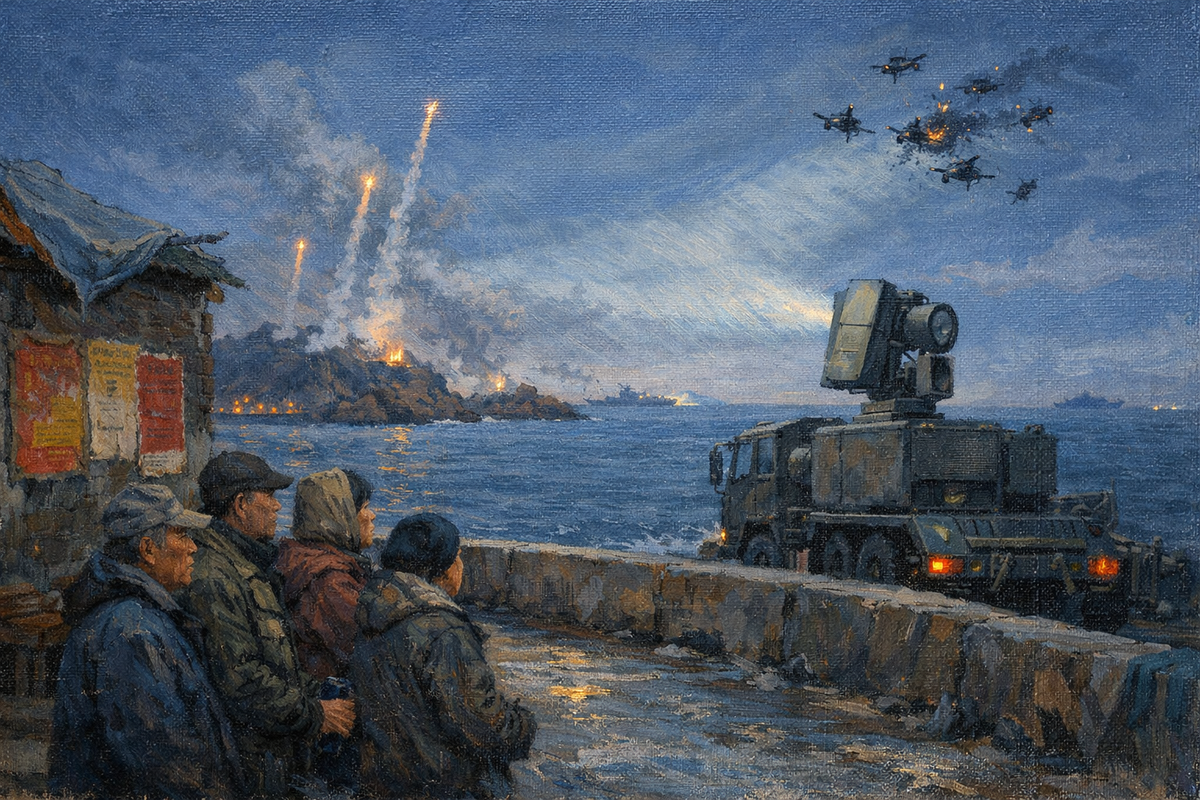
- Simplified summary: Beijing ran denser military activity around Taiwan in late December 2025. Le Monde describes public notices in Dafu village on Pingtan that warned fishers not to sail and told residents to take steps to reduce shattering risk, and it reports rockets were fired on December 29 and 30 from a nearby rocky outcrop. Beijing therefore combines military tempo with psychological pressure and makes Taipei crisis judgment harder.
- Taiwan impact: The impact area is warning chains and civilian resilience. Beijing puts military activity into daily life and raises social noise, so Taipei pays higher mobilization and external communication costs.
- Watch point: Whether Beijing adds navigation limits near Pingtan or issues new drill statements within seven days.
Original title: China's Pingtan Island reflects rising tensions in the Taiwan Strait
Source and time: Le Monde | Thu, 08 Jan 2026 19:30:12 GMT
2) Immediate | Trump language shifts decision space toward Xi
- One line summary: Washington President Trump said Taiwan is up to Xi and he does not want the status quo to change.
- Simplified summary: Washington President Trump told Reuters he would be very unhappy with a change in the status quo. Reuters reports a Chinese embassy spokesperson said Taiwan and its resolution are purely within Chinese sovereignty and opposed foreign interference. Washington therefore must manage deterrence signals and reduce Beijing room to misread US limits.
- Taiwan impact: The impact area is deterrence credibility and allied expectations. Beijing may treat signaling swings as a window and increase gray zone actions.
- Watch point: Whether the White House or State Department issues a clarification or new Taiwan security language within seven days.
Original title: Trump says Venezuela does not give China a Taiwan precedent, but it's up to Xi
Source and time: Reuters | Thu, 08 Jan 2026 23:27:08 GMT | PRC official
3) Structural | Pentagon turns 2027 into a capability threshold
- One line summary: Washington Defense Department frames 2027 as a capability requirement for Taiwan scenarios and says the PLA keeps advancing.
- Simplified summary: Washington Defense Department released its annual China Military Power Report on December 23, 2025. War on the Rocks says the report judges the PLA continues to build Taiwan oriented capabilities despite leadership purges and investigations, and it treats the 2027 goal as capability based and tied to coercion and potential warfighting. Washington therefore is more likely to align exercises and arms sales to 2027 and raise Taipei readiness pressure.
- Taiwan impact: The impact area is the readiness time window and resource allocation. Taipei should front load distributed command and critical infrastructure protection and align tempo with allies.
- Watch point: Whether the Defense Department publishes a public briefing package or congressional discussion schedule within seven days.
Original title: Latest Pentagon Report: China's Military Advancing Amid Churn
Source and time: War on the Rocks | Fri, 09 Jan 2026 08:30:29 GMT
4) Immediate | Venezuela operation fuels decapitation talk and raises escalation risk
- One line summary: Chinese online users call for a Venezuela style grab of Taipei leaders as a first move.
- Simplified summary: Chinese online users discussed a lightning strike to seize Taipei leaders in a Reuters report. Reuters cites Taiwan voices saying Taiwan prepared for years against decapitation and has layered air defense and radar warning, and it cites a ruling party lawmaker saying a failed attempt would escalate fast and carry very high risk. Beijing therefore increases the chance of uncontrolled escalation if it treats decapitation as an opening move.
- Taiwan impact: The impact area is command survival and the escalation threshold. Taipei should drill backup command and communications as routine and treat leadership protection as a system task.
- Watch point: Whether the PLA issues new training statements on infiltration or precision strike within seven days.
Original title: Venezuela-style strike on Taiwan's leader could prove tricky for China
Source and time: Reuters | Fri, 09 Jan 2026 07:42:30 GMT
5) Seven day accelerant | Beijing targets Japan with dual use controls and an anti dumping probe
- One line summary: Beijing Ministry of Commerce imposed dual use export limits on Japan and opened an anti dumping investigation on chipmaking materials.
- Simplified summary: Beijing Ministry of Commerce announced dual use export limits on Japan and said the measure took effect immediately. AEI reports Beijing announced a year long anti dumping investigation on January 7 focused on Japanese origin chipmaking materials. Beijing therefore links Taiwan risk to regional supply chains and raises Tokyo political costs.
- Taiwan impact: The impact area is allied support capacity and access to key materials. Tokyo business and political actors may face sharper splits and that can affect the pace of support for Taiwan.
- Watch point: Whether Beijing publishes a more detailed control list or expands the probe scope within seven days.
Original title: China and Taiwan Update, January 9, 2026
Source and time: AEI | Fri, 09 Jan 2026 21:31:08 GMT | PRC official
6) Structural | Taipei constitutional friction compresses crisis decision bandwidth
- One line summary: Taipei Constitutional Court restored its ability to rule, but the legislature keeps pressuring the cabinet and the national security system.
- Simplified summary: Taipei Constitutional Court overturned a procedural restriction on December 19, 2025. AEI reports the legislature passed motions on January 2 and applied political pressure on the premier and on National Security Council Secretary General Joseph Wu. Taipei therefore has a harder time concentrating resources and sustaining institutional trust under external pressure.
- Taiwan impact: The impact area is government effectiveness and crisis mobilization legitimacy. Beijing can exploit institutional conflict to deepen divisions and slow wartime coordination.
- Watch point: Whether the legislature advances a no confidence move or expands replacement procedures within seven days.
Original title: China and Taiwan Update, January 9, 2026
Source and time: AEI | Fri, 09 Jan 2026 21:31:08 GMT
7) Seven day accelerant | Taipei reports higher PRC cyber pressure hitting government networks
- One line summary: Taipei National Security Bureau said PRC cyber operations increased in 2025.
- Simplified summary: Taipei National Security Bureau described higher cyber pressure in its annual report. AEI says the bureau described a six percent rise versus 2024 and said high intensity disruptions primarily targeted government agency networks. Beijing therefore can use cyber disruption before a crisis to weaken public confidence and interfere with cross agency coordination.
- Taiwan impact: The impact area is critical infrastructure resilience and the information environment. Taipei must divert emergency and public messaging capacity and that can slow external coordination.
- Watch point: Whether Taipei issues new cyber alerts or names impacted agencies within seven days.
Original title: China and Taiwan Update, January 9, 2026
Source and time: AEI | Fri, 09 Jan 2026 21:31:08 GMT
8) Seven day accelerant | Beijing and the KMT plan to revive a party to party forum
- One line summary: Beijing plans a three day forum starting January 27 in Beijing and seeks to restore party to party contact with the KMT.
- Simplified summary: Beijing plans a three day forum under a party to party communication framework. SCMP reports the forum would be the first since 2016 if it proceeds and says the event was held 11 times before. Beijing therefore can bypass the ruling administration and expand influence over elections and agenda setting.
- Taiwan impact: The impact area is political mobilization and management of social division. Beijing can package political influence work as normal exchange and dilute Taipei unified external messaging.
- Watch point: Whether the KMT publishes a delegation list or confirms itinerary and agenda themes within seven days.
Original title: Are the Communist Party and the KMT reviving a cross-strait political channel
Source and time: SCMP | Fri, 09 Jan 2026 12:01:08 GMT
9) Structural | Beijing highlights a high power microwave counter drone system
- One line summary: Beijing revealed a truck mounted high power microwave weapon and positioned it as a low cost way to defeat drone swarms.
- Simplified summary: Beijing revealed a truck mounted system called Hurricane 3000. Asia Times reports the system was developed by a state owned defense contractor and was displayed in a September 2025 parade, and it says the system can defeat small drones beyond three kilometers and integrate into layered air defense. Beijing therefore shifts the counter drone cost exchange toward electromagnetic defeat and pushes Taipei to improve dispersion and deception tactics.
- Taiwan impact: The impact area is asymmetric cost exchange. Taipei should adopt multi axis dispersion and decoy tactics and reduce predictability of a single swarm path.
- Watch point: Whether Beijing releases new test footage or announces deployment integration information within seven days.
Original title: China's Hurricane 3000 casts an electric storm in the Taiwan Strait
Source and time: Asia Times | Fri, 09 Jan 2026 19:32:21 GMT | PRC official
Trends and scenarios
- Beijing moves drills closer to frontline communities and expands cyber disruption, so Taipei must put civilian system protection at the center of readiness. If Beijing keeps stacking pressure in short cycles, Taipei will face more frequent rapid mobilization and recovery tests.
- Washington embeds a 2027 capability threshold in public framing but also shows elasticity in Taiwan language, so alliance signaling becomes part of deterrence. If Beijing reads signaling swings as an actionable window, gray zone actions may intensify and become harder to unwind.
- Tokyo faces pressure on key materials while Taipei domestic friction rises, so regional coordination depends more on verifiable schedules. If Washington and Tokyo provide clearer exercise and logistics planning in the next seven to thirty days, Taipei expectation management will stabilize.